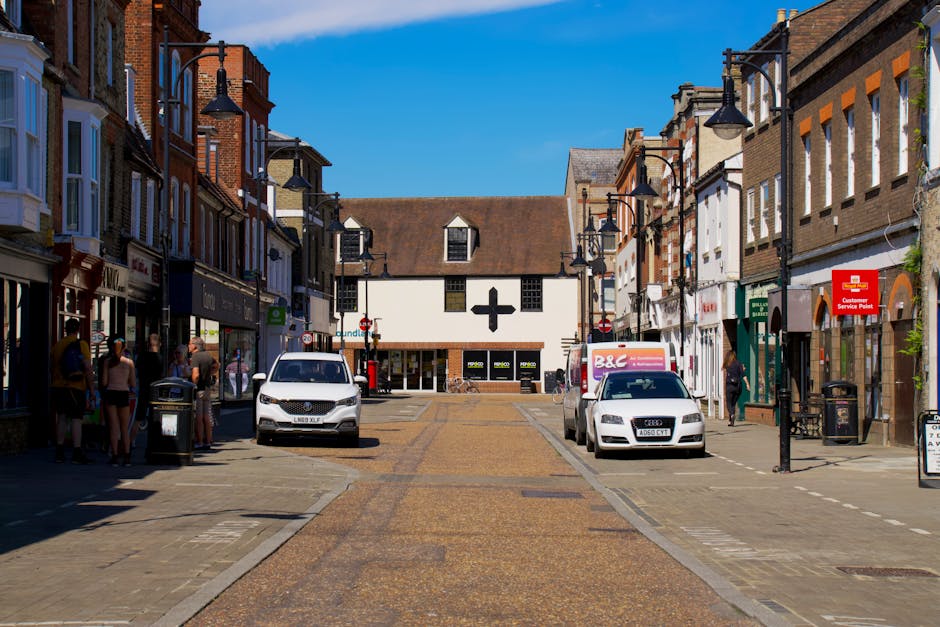
HA4 removals advice for Ruislip High Street flats

Moving out of a flat on Ruislip High Street sounds simple until you're standing in a narrow hallway with two boxes, a sofa that looks wider than the lift, and a neighbour politely waiting to get past. That's exactly why HA4 removals advice for Ruislip High Street flats matters. The local details make a big difference: access, parking, timing, building rules, stairwells, and the odd awkward corner all shape how smooth the move feels.
This guide walks you through the practical side of flat removals in HA4, with clear advice on planning, packing, loading, and avoiding the common headaches that catch people out. Whether you're leaving a studio, a split-level flat, or a top-floor apartment above the shops, the aim is the same: fewer surprises, less stress, and a move that feels controlled rather than chaotic.
To be fair, most moving problems are not dramatic. They're the small things: a forgotten parking check, a box that should have been labelled, a mattress that won't turn the corner. Sort those out early and you're already ahead.
Practical takeaway: the best removals plan for Ruislip High Street flats is one that matches the building, not just the date. Access, timing, and packing matter as much as the van itself.
Why HA4 removals advice for Ruislip High Street flats Matters
Flat removals in and around Ruislip High Street are a different beast from a straightforward house move. You are often dealing with shared entrances, limited waiting space, upper floors, narrow staircases, lift bookings, and neighbours who need to get to work while your mattress is half-way through the lobby. That does not mean moving is difficult by default. It just means the move needs a little more thought.
The HA4 area has a mix of residential flats, converted buildings, and newer developments. Some have tidy access and decent loading space. Others, let's face it, are a bit awkward. If you know what kind of building you're dealing with before moving day, you can plan the van size, the carrying route, and the order in which things leave the property.
This matters for three simple reasons:
- Time: tight access can slow loading if items are not packed and labelled properly.
- Cost: delays, parking issues, or extra handling can push the move beyond the first plan.
- Stress: the calmer the plan, the easier the day feels for everyone involved.
There's also a trust side to it. If you are hiring movers, you want a crew that understands flat removals rather than just any van and a pair of hands. A team that is used to stair carries, fragile item handling, and careful building etiquette is going to save you grief. Not magic. Just experience.
And if you are still comparing options, it helps to look at broader services too. The company's flat removals page is a useful starting point if your move is more apartment-specific than general house-moving.
How HA4 removals advice for Ruislip High Street flats Works
At a practical level, good removals advice works by reducing the number of unknowns before moving day. For flats on Ruislip High Street, that usually means checking the building layout, thinking about access, and matching the service to the move size.
In simple terms, a typical flat move goes like this:
- You assess what needs moving and how much of it there is.
- You check the property layout: stairs, lift, entry points, and turning space.
- You decide whether you need packing help, storage, or a larger vehicle.
- You book a slot that works with building rules and local parking conditions.
- You prepare boxes, disassemble larger furniture where needed, and label everything clearly.
- On the day, movers carry items out in an order that protects both the property and the items.
That sounds fairly standard, and in many ways it is. But flats on a busy high street add a few extra considerations. There may be pedestrians close to the kerb, limited stopping space, or restrictions on loading times. A move at 8:00am on a weekday feels very different from a quiet Saturday afternoon. The street sound, the foot traffic, even the rhythm of deliveries nearby all affect how the day unfolds.
For smaller loads, a man and van service may be enough. For larger flats or multi-room moves, a more structured removal services approach is usually the better fit. It depends on volume, access, and how much lifting the job will involve.
One thing people often miss: a flat move is not just about getting items from A to B. It is about sequencing. The right order matters. What comes out first, what stays until last, which items go in the lift, which are better carried down manually, and what should never be placed at the bottom of the van. Small decisions, big difference.
Key Benefits and Practical Advantages
Good removals planning for HA4 flats does more than stop the move from going wrong. It also saves time, protects belongings, and makes the whole process feel far less disruptive.
Here are the most practical benefits:
- Less lifting stress: items are packed and staged in a way that reduces repeated handling.
- Better protection for walls and floors: careful carrying lowers the chance of scuffs and knocks in shared areas.
- Cleaner timing: when access is thought through, the crew spends more time moving and less time waiting.
- Lower risk of damage: properly wrapped furniture and labelled boxes are easier to load safely.
- Better communication: everyone knows what is happening and when.
There is also a mental benefit that people underestimate. A move becomes easier to handle when the plan is visible. You know what is happening with the sofa, you know where the boxes are, and you know the van will not be blocked in by a random parking situation. That alone is a relief.
For larger loads, it can also make sense to look at related moving support such as packing and unpacking services. If you are balancing work, family, or a tight turnaround between tenancies, having help with the prep can take a surprising amount of pressure off.
Expert summary: the real value of local removals advice is not just speed. It is control. When you control the plan, the move feels smaller than it looked from the hallway.
Who This Is For and When It Makes Sense
This advice is useful for anyone moving within, into, or out of flats on Ruislip High Street, but it is especially helpful if your building has limited access or if you are working to a deadline.
You will probably find it most relevant if you are:
- leaving a first-floor or top-floor flat without direct lift access
- moving from a converted property with narrow stairs
- trying to avoid disrupting neighbours during busy hours
- shifting furniture out of a compact flat with tight corners
- moving on a lease deadline or between tenancies
- dealing with items that need extra care, such as mirrors, TVs, or awkward furniture
It also makes sense if you are comparing moving setups. Some people only need a van and help loading a few boxes. Others need a fuller plan with packing, lifting, transport, and perhaps temporary storage. Truth be told, flat moves rarely fit the same mould twice.
If you are in a smaller flat, the move may be simpler than you think. If you are in a larger apartment with multiple rooms, furniture, and a mixture of personal and work items, the job can turn more complex quite quickly. A quick walk-through before booking usually reveals more than people expect.
For those comparing broader moving options, the removal companies page can help you think through the type of support that fits your situation, especially if you are still deciding whether you want a full removal team or a lighter man-and-van setup.
Step-by-Step Guidance
If you want a move that feels organised rather than improvised, follow a straightforward process. Nothing fancy. Just a sensible sequence.
1. Check access before you do anything else
Walk the route from your front door to the street. Measure doorways if needed. Look at stair turns, lift size, and any tight corners. If you have a sofa or wardrobe that only just fitted on the way in, there is a good chance it will need careful handling on the way out too.
2. Identify parking and loading points
See where a van can stop safely and legally. On a busy high street, this can matter more than people realise. If loading is likely to take time, plan for it. A van parked awkwardly for ten minutes is one thing; being blocked in with half your flat still upstairs is another.
3. Sort your belongings by priority
Make a quick list: essentials, fragile items, furniture, and items going into storage or disposal. Separating things early avoids last-minute confusion. It also stops important items being buried under random cables and kitchen bits. We've all seen that box.
4. Pack with the carry in mind
Heavier items belong in smaller boxes. Lighter items can go into larger boxes. Label each box by room and priority. If a box contains breakables, say so clearly. A good label saves a lot of guesswork when everyone is a bit tired and the stairs are doing their usual workout routine.
5. Dismantle furniture where it helps
Flat-pack wardrobes, bed frames, shelves, and table legs are often easier to move if they are taken apart in advance. Keep screws and fittings in sealed bags and tape them to the correct item or store them in a clearly labelled bag.
6. Keep a clear access path inside the flat
Move coats, loose shoes, cleaning tools, and anything that can trip someone up. The fewer obstacles on the route, the safer and quicker the carry. It sounds obvious. Yet somehow, the hallway always fills up again.
7. Prepare a first-night box
Keep essentials separate: kettle, phone charger, toiletries, snacks, medication, documents, and a change of clothes. If your main boxes arrive late or get stacked in the wrong order, this box keeps the evening sane.
8. Confirm the final plan the day before
Check the booking time, contact details, access notes, and any special instructions. A short confirmation call or message can catch a surprising number of problems before they turn up at the kerb.
That simple. Not effortless, but simple.
Expert Tips for Better Results
There are a few practical habits that make flat removals noticeably smoother. These are the little things experienced movers tend to notice straight away.
- Use consistent labelling: room name, contents, and whether the box is fragile.
- Protect common areas: if your building allows it, use floor protection or blankets in the main route.
- Keep valuables with you: passports, jewellery, keys, and documents should not disappear into a random box.
- Plan for weather: a wet day changes everything. Wet cardboard, slippery steps, and muddy footwear all slow the move down.
- Take photos of furniture before dismantling: it helps when putting things back together later.
- Ask about storage if timing is tight: if there is a gap between moving out and moving in, short-term storage can save the day.
One small but very useful tip: keep a separate bag for chargers, remotes, and adapters. These are the items that vanish into the ether just when you need them most. A bit dramatic, yes, but also oddly true.
If you are moving items that need extra handling, such as a piano or bulky furniture, it is worth looking at specialist options like piano removals or furniture removals. Not every item should be treated the same way, and this is where a bit of judgement pays off.
Common Mistakes to Avoid
Most moving problems are preventable. That is the good news. The bad news is people still repeat the same mistakes because moving day makes everyone slightly overconfident.
- Assuming access will be fine: always check stairs, lifts, and parking rather than hoping for the best.
- Packing too late: last-minute packing leads to poor labels, broken boxes, and stress.
- Using oversized boxes for heavy items: books in a giant box are a classic mistake. A heavy classic, too.
- Forgetting building rules: some flats have quiet-hour expectations or lift booking rules.
- Not measuring furniture: a sofa that fits in the lounge may not fit through the landing turn.
- Leaving the essentials in the wrong place: the first-night box should be easy to reach, not buried behind a lamp and three plant pots.
Another common one is underestimating how long the load-out takes in a flat. Even a small place can take time if there are stairs, awkward angles, or shared access. People look at the room size and think, "This will take an hour." Then the beds come apart, the bookcase refuses to cooperate, and suddenly the afternoon is gone.
So, yes, a little humility goes a long way.
Tools, Resources and Recommendations
You do not need a pile of fancy kit to move a flat well, but a few tools and a bit of preparation make a real difference.
| Item | Why it helps | Best for |
|---|---|---|
| Strong boxes | Protects contents and stacks neatly in the van | Books, kitchenware, mixed household items |
| Bubble wrap or paper wrap | Cushions fragile items during transport | Glassware, ornaments, lamps |
| Labels and marker pens | Makes unpacking and loading quicker | Every room, especially multi-box loads |
| Furniture blankets | Helps prevent scuffs and scratches | Tables, wardrobes, soft furnishings |
| Tape and zip bags | Keeps parts and fittings together | Disassembled furniture |
Other useful resources include a tape measure, a small toolkit, and sturdy gloves. If you are moving a lot of boxed items, a trolley can help on long internal corridors or to bridge the gap between door and van. Nothing glamorous, but very helpful.
For local move planning, it can also help to read area-specific content such as tight-access moving guidance. The details in a nearby local setting often translate surprisingly well to flats on a busy stretch like Ruislip High Street.
Law, Compliance, Standards and Best Practice
When a move takes place in a flat, it is worth thinking about safety, building etiquette, and the responsibilities that come with shared spaces. You do not need a legal lecture, thankfully, but a few basics matter.
Insurance and handling: if you are hiring movers, check that the service is clear about insurance and item handling expectations. Not every move is the same, and it is fair to ask how goods are protected during loading, transit, and unloading. The website's insurance and safety page is useful if you want to understand that side of things better.
Health and safety: stair carries, heavy lifting, and tight spaces can create real risks if people rush. Good practice means keeping routes clear, lifting with care, and not overloading boxes. The health and safety policy gives a sense of the standards a responsible mover should follow.
Building rules and neighbours: flats often involve shared entrances, communal hallways, or lift use. It is simply good practice to avoid blocking access, keep noise reasonable, and respect agreed moving times. That is not just polite, it helps the whole day stay calmer.
Payments and terms: before you book, make sure you understand the quote structure, what is included, and whether extras might apply for stairs, long carries, or waiting time. A clear check now can prevent awkwardness later. If you want to compare the commercial side, the pricing and quotes page is a good place to start.
Best practice is really about being precise and fair: clear communication, safe lifting, honest pricing, and no assumptions. Nothing flashy. Just proper moving work done properly.
Options, Methods, or Comparison Table
Different flat moves need different setups. There is no single best method for everyone, and that is where a quick comparison helps.
| Option | Best for | Pros | Watch out for |
|---|---|---|---|
| Man and van | Smaller loads, studio flats, quick local moves | Flexible, often cost-effective, good for simple access | May be less suitable for large loads or complex furniture |
| Flat removals team | One- to multi-bedroom flats | More structured, better for heavier lifting and access challenges | Needs more planning and usually a bigger budget |
| Packing plus removals | Busy households, tight deadlines, fragile contents | Saves time, improves organisation, reduces packing stress | Needs clear item labelling and early booking |
| Storage plus removal | Delayed move-in dates or temporary downsizing | Useful when timing does not line up | Requires extra coordination and careful inventory |
If your flat is easy to access and the move is small, a van-based service may be enough. If the building is awkward, the furniture is bulky, or the timing is tight, a more complete removals service is usually the safer choice.
And yes, people do sometimes try to do it all with one car and a heroic attitude. It rarely ends with joy.
Case Study or Real-World Example
Here's a realistic example. Imagine a two-bedroom flat above retail units on Ruislip High Street. The resident is moving to another part of HA4 on a Friday afternoon. The flat has a narrow staircase, a large corner sofa, two beds, and a stack of boxed kitchen items. Parking near the building is limited, and the move has to be done before the evening rush.
The sensible plan is to start early, confirm the loading point, and pre-pack everything except essentials the night before. Bed frames are dismantled. The sofa cushions are wrapped separately. Boxes are labelled by room. The first-night bag is kept by the door, not in the van. The movers arrive, walk the route once, and choose the right order for loading so the heaviest items are secure and the fragile boxes stay on top.
Because access was checked in advance, the team does not waste time at the kerb trying to guess where to stop. Because the boxes are labelled properly, the unloading side is quicker too. No drama, no scrambling. Just a fairly busy day that stays manageable.
That sort of move is not unusual, by the way. It is exactly the sort of job that rewards preparation more than brute force.
If the resident had also needed extra support with general household transport, a broader service such as house removals would have been worth considering, especially if the contents were closer to a full-home move than a light flat clearance.
Practical Checklist
Use this checklist the day before your move. It will not make the boxes lighter, but it will make the day easier.
- Measure doorways, stairs, and any tight turns.
- Confirm van access and parking arrangements.
- Label every box by room and priority.
- Pack a first-night box with essentials.
- Dismantle furniture where practical.
- Keep valuables and documents with you.
- Protect floors and shared areas if needed.
- Check lift booking or building access rules.
- Set aside tools, tape, and spare bags.
- Confirm the moving time and contact details.
- Separate items going to storage, recycling, or disposal.
- Make sure pets, children, or work commitments are planned around the move.
Quick sanity check: if you can answer "where is it going?" for every major item, you are in good shape. If not, pause and sort that out first. It saves a lot of bouncing around on moving day.
Conclusion
HA4 removals advice for Ruislip High Street flats is really about making the move fit the building, the street, and your schedule. When you plan around access, parking, packing, and safe handling, the whole process gets more predictable. That is what people want, even if they do not say it out loud. Predictable. Calm. No nasty surprises.
Whether you are moving a small studio or a larger apartment, the same principle holds: prepare early, label clearly, think through access, and choose the right level of help. A little structure goes a long way, especially in a busy local area where timings and space are not always generous.
If you are still shaping your plan, take a look at the company's removals and man with van options to see which service best matches your flat, your furniture, and your timeline.
Get a free quote today and see how much you can save.
And when the last box is finally inside the new place, and the kettle is on, the whole thing suddenly feels a lot more manageable. A bit of planning does that.
Frequently Asked Questions
What is the best removals option for a flat on Ruislip High Street?
The best option depends on how much you are moving, how easy the access is, and whether you need packing help. Smaller moves often suit a man-and-van setup, while larger flats usually benefit from a fuller removals service.
How far in advance should I book a flat move in HA4?
As early as you can, especially if you need a particular date or have tricky access. Busy times fill up quickly, and a little lead time gives you more choice and less pressure.
Do I need to measure furniture before moving out of a flat?
Yes, for larger pieces it is a smart idea. A sofa, bed frame, wardrobe, or large table may need dismantling or careful turning in narrow hallways and stairwells.
What should I do if my flat has no lift?
Plan for a stair carry, use smaller boxes, and let the movers know in advance. It is perfectly manageable in many cases, but the route should be checked before moving day.
Can movers help with packing as well as transport?
Yes, many people find packing support very helpful. It saves time and often reduces damage because boxes are prepared more consistently and labelled more clearly.
How do I avoid parking problems on Ruislip High Street?
Check where a van can stop safely and legally, and confirm access before the move. On a busy high street, parking and loading space can make or break the timing.
What items should I keep with me instead of putting in the van?
Keep passports, keys, valuables, medication, important documents, and your first-night essentials with you. If something would cause real stress if delayed, keep it close.
Is storage useful for flat removals?
Yes, especially if your move-out and move-in dates do not line up. Temporary storage can make the transition much easier and reduce the rush to move everything in one go.
How can I protect my flat and the communal areas during the move?
Clear the path, use protective materials where needed, and move carefully through shared areas. Good movers will also aim to avoid scuffs, knocks, and unnecessary noise.
What should I check before accepting a removals quote?
Make sure you understand what is included, whether stairs or waiting time affect the price, and how access details are handled. Clear quotes are usually the least stressful quotes.
Are specialist services needed for bulky or fragile items?
Sometimes, yes. Items like pianos, large wardrobes, and delicate furniture can benefit from specialist handling rather than being treated like ordinary boxes and chairs.
What is the biggest mistake people make with flat removals?
The biggest mistake is underestimating access. People often focus on packing and forget the practical route out of the building. Measure, check, and plan first. It makes a real difference.